AI-First Workflows: How Modern Teams Are Designing Work Around AI in 2026
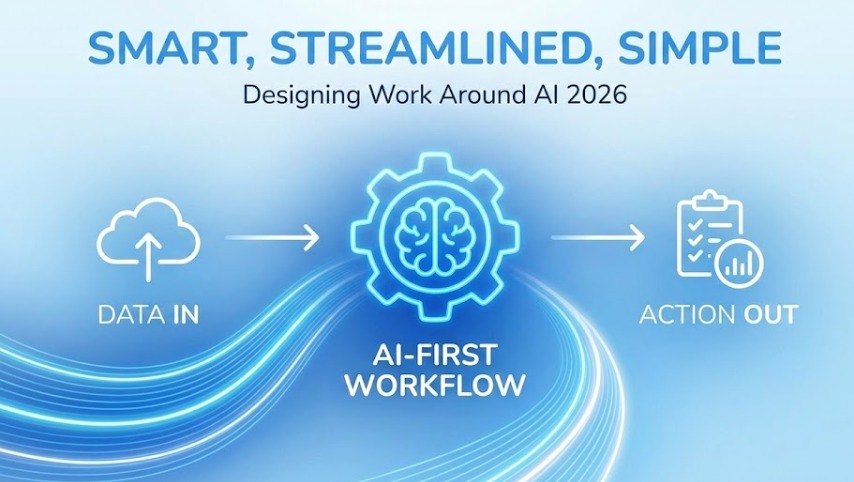
For a long time teams used AI as an adjunct - adding chatbots here and there, implementing some automation of tasks, developing AI writing tools for content. However, in 2026 that usage changed dramatically.
Today's forward-thinking teams no longer see AI as something to be added to their current workflow; they’re building workflows based on AI first. AI is now the source of how work is designed, how decisions are made and how actions are taken.
This shift of view from viewing AI as an adjunct to how it now defines how companies are being competitive today is a smaller but very significant change that determines how competitive companies will be in the future.
What Are AI-First Workflows?
An AI-first workflow is one in which artificial intelligence is utilized as the main point of decision, rather than just a tool.
In an AI-first model, workflows are performed primarily through artificial intelligence rather than by people individually determining actions based on data.
For example, AI systems will:
1.Receive and analyse data sent to them
2.Identify the user's purpose and meaning behind the data
3.Create or trigger the necessary action without human intervention
4.Continuously learn from the results of its own decisions and improve future execution.
Humans remain responsible for managing operations but are moving from executing tasks and making decisions directly, to being responsible for oversight and creating long-term strategies.
In simple terms: "The workflow starts with AI thinking first, not humans clicking first"
Why Teams Are Moving to AI-First Workflows in 2026
Scale is the reason people have gotten hyped-up about moving to AI-powered workflows (though it isn't the hype).
As teams grow, every day fewer and fewer things can be done manually. More and more emails can be sent without being read; dashboards get ignored; decisions take longer to make. AI-powered workflows solve for these issues by eliminating "people" (i.e., human) bottlenecks.
There are four key factors that are driving this transition to AI-powered workflows:
1. Real-Time Availability of Data
2. Increased Capability of AI to Reason and Understand Context
3. Increased Pressure to Get Work Done Faster with Fewer People
4. Increasing Cost of Operation
In 2026, Speed and Flexibility will be significant Competitive Advantages (and AI-powered workflows will enable both).
How AI-First Workflows Actually Work
The workflow of an AI-first organization typically includes the following:
1. Event occurs: The workflow is initiated by a message, a user action, an update to a system, or a change in data.
2. AI interprets context: The AI Will help determine intent, urgency, sentiment, and any anomalies.
3. Decision layer is activated: Unlike in traditional workflows where there are set rules for every situation, in an AI-first organization AI will provide the most appropriate next steps.
4. Automation carries out tasks: Automation will help to facilitate these actions across all of the organizations' tools from CRM, email, dashboards and databases.
5. Humans only step into approve or deny exceptions.
This structure reduces repetitive work and also greatly increases consistency.
Real Examples of AI-First Workflows
AI-first workflows have already begun to be applied in many different industries.
1. Customer Support - utilize AI to prioritize tickets, draft responses, and escalate only more complicated issues.
2. Marketing teams - are adjusting campaigns in real time based upon engagement metrics.
3. Operations - are utilizing AI to identify delays in processes and initiate corrective actions.
4. Product teams - are utilizing AI to continuously analyze user feedback and to inform future product roadmaps.
In all the cases above, AI manages the workflow and humans make the final decision.
Common Mistakes Teams Make
Although many teams find implementing AI-first ways of working advantageous, they are still facing difficulty with issues such as:
1. Viewing AI as only automation through rules
2. Not setting up explicit limits on AI decision making
3. Oversight of quality in data
4. Forgetting that AI cannot do everything without human participation.
The most successful teams will build their workflows such that they enhance the effectiveness of human intelligence instead of removing it altogether.
Who Should Adopt AI-First Workflows?
The best uses of AI-first workflows include:
1. Aiding startups in their rapid growth and scaling of operations.
2. Supporting remote workers and dispersed teams
3. Providing business solutions to SaaS and digitally based businesses
4. Assisting teams in maintaining higher volumes of requests and data.
If your team is spending more time coordinating than working meaningfully, it may be beneficial for you to consider the possibility of AI-first designing.
The Future of Work Is AI-First
By 2026, the question is no longer whether we should use AI; it is whether AI should help us make decisions before we take action.
Those that redesign their workflow using AI at the center will be more competitive, more efficient, and ultimately more successful in an ever-increasingly automated environment.
AI-driven workflows are not a thing of the future; they already exist!
Building things, learning from them, and writing it down.